Thursday, 7 February 2019

The Bladeless Blade of Kammorachû


TL;DR: It's a blade that works as a spell. Any spell.

In the north the legends of the ancient kingdom of Tel Ammon are still whispered rather than spoken aloud, and never at night. Their enormous ruins, tombs, and broken statues still dot the north, and the darkness pooling in those tombs and in the shadows of those ruins is unquiet.

Still more is whispered of the Ammon mage Kammorachû, a bitter and black-hearted man, who deep in his cavernous lair beneath the city of Akh-Ammon forged the Bladeless Blade.

The Bladeless Blade, has, as the name tells, no blade; it is hilt only. Just a hilt. Useless. But for the gifted, those in the know, the Bladeless Blade is also a cage. It can capture spirits. It can capture spells.

When Kammorachû wielded it in battle against the southern birdmen the blade sizzled and thundered; some spells of water and lightning where intertwined there. It soaked and electrocuted the enemy simultaneously.
When the foul mage wielded it during the Ammon Kinstrife it sputtered and flared like oily flame. Fire and grease was on it. It set the enemy in flame as if they had been drenched in lamp oil.
When he cut off the head of the leader of the third slave rebellion, he had no spell on the blade at all. It is said that the Bladeless Blade caught the soul of the slave leader; sucked it right out of his heart, and used it as blade and that afterwards, the invisible blade screamed in anguish as it cut down its former comrades.
He wielded it with a spell of Cutting against the mountain hordes. Its blade was invisible but cut through sword, armour, and flesh as if it was nothing.

Rumour has it the dark one, Kammorachû, assassinated his own king and usurped the throne with the Bladeless Blade, using some vile curse set in the blade. He cut the king by stealth; the blade was mere hilt, after all, and easy to conceal. The curse could not be seen, nor did the king feel anything when he was cut; but it bit deep, and worked its way inside the king for 50 years, while Kammorachû waited patiently, till at last he died of some sudden illness - which the race of Ammon does not suffer. The Fifty Year Sword it is also called because of this. Deep its bite can be, but slow the blood to run...


Yeah it's a hilt you can put a spell on and I mean any spell. This is gonna fuck your game up.

New mage class: Earthsea Mage

I often dislike magic systems in games. It's often sterile, boring, or a very specific solution to a very specific problem.

Very rarely does it feel like magic truly connects to the fabric of the universe, to the very nature of existence.

By Tim Robbins

It does feel like that in Ursula le Guin's A Wizard of Earthsea.

So I built a GLOG class of this type of magic.

Summary:


  • It's very wonky. There's only 4 spells and 1 unique ability. Yeah, you heard me. 
  • It's subtle. There's no explosions here. Rather, there's a deep and subtle manipulation of almost anything.
  • The spells are: Call, Command, Summon, Change. That's it; but you can use them on almost anything. Much will be up to the DM.
  • You can only enchant something if you have the True Name of said anything. Finding out the True Name is an unique, once-a-day-ability.

Wednesday, 6 February 2019

d20 Escaped Spells

We all know that spells are actually spirits from another dimension that a wizard traps in his brain.

But we usually don't bother with the implications of that. He always meets them in books, doesn't he? He *could* meet them face-to-face, right there in the dungeon. Wild Spells. Escaped Spells. Spirits, for all intents and purposes.

Roll on this table for a random spell encounter. Or use it when your player's spells gain sentience.
Here they are.

by Apofiss.


  1. Meln. A small, pink candlelight floating without a candle. Will strike up a conversation. 
    1. Personality: hey heeey, my man! 
    2. Speaks: like a ridiculously disarming friend with this voice who hasn't seen you in a long time. 
    3. Wants: everyone to get along. 
    4. Spell: Charm Person. The person regards you as a good friend and ignores the obvious spell you just cast on them. If you invest at least 4 dice into this spell, the duration becomes permanent.
  2. Tutatat. Looks like any of the perfectly normal d3 following: 1. a red apple 2. a fresh fish (1 out of 6 odds it's swimming through the air) 3 a silver spoon. Ideally players take it with them before they realize it's a spirit. 
    1. Personality: very, very shy. Will be embarrassed if the players figure out what it is. 
    2. Voice: like a 4 year old girl, including the child-like cadence. 
    3. Wants: to hide and to be hidden! 
    4. Spell: Disguise.
  3. Sashaan. An upside down green-stained copper mask wreathed in blue flame. 
    1. Personality: seemingly harmless, but will express alarming interest in cutting tools and facial injuries. 
    2. Voice: hoarse and after a while kind of creepy. 
    3. Wants: to replace and become a face. All human corpses in the dungeon are missing their faces. 
    4. Spell: Death Mask
  4. Xoixoi. A floating eyeball in a reddish vortex. If it spots you it will scream and scream and scream until you can calm it down (CHA check). This may attract enemies, for which it will apologize.
    1. Personality: skittish and anxiety-riddled. 
    2. Voice: high and hysterical. 
    3. Wants: for everyone to DON'T SNEAK UP ON ME LIKE THAT, CHRIST. 
    4. Spell: Alarm. Becomes a floating eyeball for [sum] / 2 hours; if it sees an intruder it will scream; you’ll hear it at any distance.

Saturday, 2 February 2019

The air is made of dragons

DRAGON

Silvery serpentine air spirits. Arrogant, powerful, knowledgeable, inscrutable.
Loves speed, victory, freedom.
Wants: heat and magic items to devour, to show its strength and dominance, to be sovereign, SPEED!


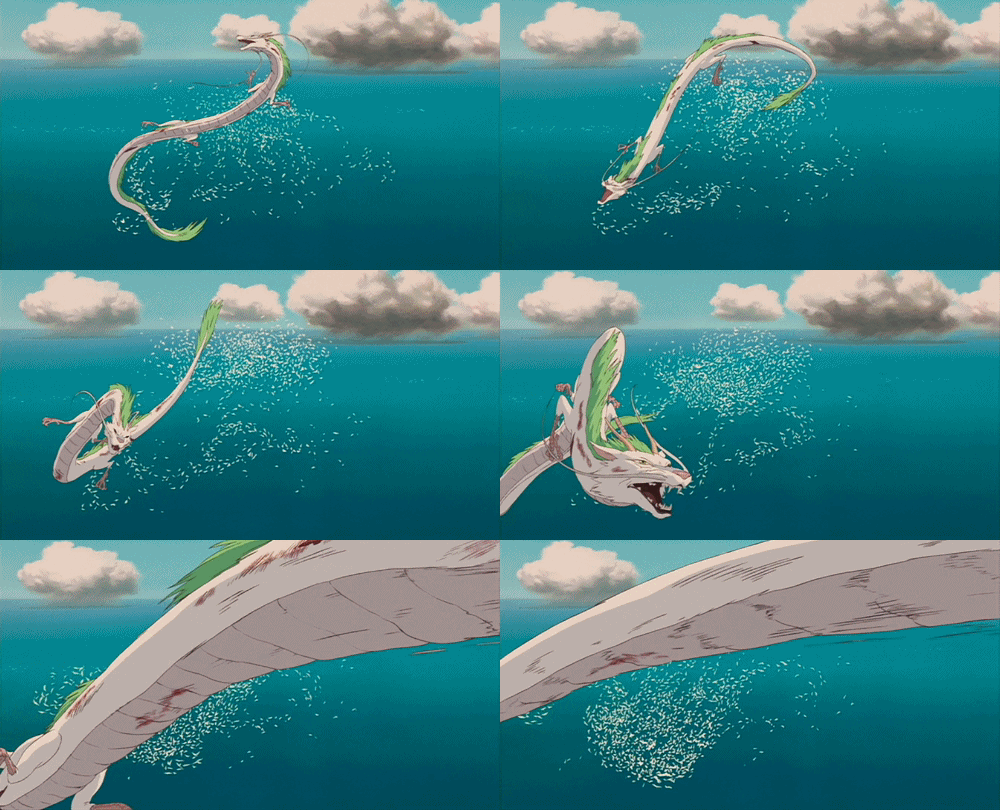
Dragons have kinship with air and fire; they throne as Lords of the Middle Air among the clouds. Their bodies are serpentine and subtle; swift coils of feather, scale, fur and talon. No wings; they swim in the air as if in water. Their areal nature makes them hard to see. Only a silver shimmering, faster than thought, is what an untrained mortal may see of a dragon. 

Dragons are of air, and air is of dragons. Every breeze and zephyr is governed by a minor dragon. The Cardinal Lords govern the winds of the cardinal directions.

The Lords of the Middle Air meddle mostly in their own affairs, which are incomprehensible to mortals and have much to do with movement. Their parliaments scheme and battle amongst themselves up there in the sky. It can be cramped up there in the Middle Air; there's many a seething mess of coiling dragons whizzing around, as if in constant dance and constant battle. Movement is to dragons what territory is to mortals. They compete for speed and power. They race around the entire sky. They fight terrifying duels over cloud formations and pillars of rising heat. They court each other in break-neck race-like dances, whizzing by mountains. Salori legends say they chase the sun around the sky.

Dragons have infinite life spans and are nigh unkillable. Young dragons die if they stop moving - like the wind, falling still means that they simply become air - older ones just don't like it. If a dragon dies, its subtle body melts into clean air within hours. They know much - the air flows everywhere - especially about spiritual and cosmological matters and shifts. Dealings between dragons and mortals are exceedingly rare; for a dragon to deign to slow its all-important speed and listen to a mortal, the mortal must either be in possession of something a dragon wants (heat, mainly, or energy in other forms, such as magic or magical artifacts that they eat and consume) or very, very interesting. 

Friday, 1 February 2019

Trying to make humans not boring


Humans are pretty weird, man. There's so many cultures around the world that are just staggeringly different from generic-kindofmedieval-europe. So why are the "human" places usually the normal places, the generic places, the medieval-europe places, complete with king, castle, and Church? Especially the last one baffles me; presumably Christ didn't show up in your world (unless you're C.S. Lewis), so how can there be such a construction as a Church? Monotheism does not equal Church.

The Salori are a group of humans who are definitely not medieval-european, and certainly have no church. They're black, for starters - except that the concept of race hasn't been invented, so really I should say that their skin tone varies from reddish brown to light brown; with sometimes odd, mottled crimson markings appearing, especially in the heartland. They keep saying this is somehow related to the betrayal and death of some ancient god-king which stained the entire land with blood. Whatever. Their faces are sharp and long, and they have sharp cheekbones. Salori are tall and a bit lanky, they often have bright eyes.
Salori have the sharp features above, the skin colour below. Not pictured: red skin variations.
Art by theminttu
Many Salori, even mere farmers, are proud and haughty, and don't shirk confrontation if they detect offense. Almost all adult Salori, men and women, are armed with a long, thin dagger tucked in the sash around the waist. It's usually an heirloom, and they're not afraid to use it.

They came into Circassa from the North, over the Shield Wall mountains which block the subcontinent from the rest of the world. They came here from some half-remembered distant strife, following the Sage called Salor, after whom their entire people is named.

When they got there they found that the place was already inhabited by a staggering variety of goblin-species (seriously, how do these guys keep ending up everywhere) and the proud last remains of a waning, non-human empire called Tel Ammon. Exactly how this empire was non-human the histories don't mention; they might have been elves or even vampires. After a tense co-existence war broke out, the tribes united, and the empire was destroyed. It's said that the region Tel Ammon is still haunted by vengeful specters, clad in mottled gold and opulent robes turned to tattered rags, which is of course, totally true.

The Salori remained nomad tribes for a long time, until some guy named Carahir was instructed in the secret arts of agriculture and architecture by one of the thousands of spirits living in the volcano. Tradition calls him Maskurat, Old-Man-of-the-Volcano. They say he's got one eye, black hands, and a crown made of antlers. So Carahir built the ancient city now known as Godsgrave, and then, according to who you talk to, tried to conquer all the continent, what a dick, or tried to conquer all the continent, what a hero. Some complicated stuff went down, Carahir ended up killed by a cowardly assassin/heroic freedom fighter named Alkoveran still despised/venerated to this day, and the landscape of Circassa was forever changed.


When the dust settled, the Salori were now split up in the settled peoples and the tribes of the old ways. The settled people organized in Manses, which are like a mix between dynastic oligarchies, republics, political parties, and corporations.

There's four of them now, and they own most of the fertile land of Circassa. Here they are:


Manse Neraan are a bunch of fat merchant slavers. Their ancestral seat, Kratum Neraan, sits right on the flanks of the volcano, a mother-of-pearl bulwark of domes, aquaducts, many many terraced bloodrice paddies, and many many slave pits. They buy slaves from overseas or overmountain, but they also have a dedicated in-house slave hunter branch, which organizes raids on the tribes and even ordinary travellers without Freedom Papers which are sold at exorbitant prices. They're filthy, filthy rich, and very untrustworthy. Their taxes are incredibly high but they beat down peasant revolts mercilessly. It's an open secret that the Neraan employ some sort of assassin guild, possibly assassin-wizards.

Like a bunch of these buildings stacked into one giant upside down chandelier. Not pictured: terrible slave pit conditions.

Manse Tennion is a collection of feudal matriarchies around bitter old witches, allied only by pragmatics and tradition, because most of them can't stand each other. Their ancestral seat of Al Hneren to the north was devastated by the magic Chernobyl that concluded a war against the Northern invader long ago. Their new home, Tuhmas Tennion or Home-In-Exile lies in a desert to the south and is a collection of separate towers and fortresses, one per sorcerer-matriarch, and very well guarded (they're nothing if not paranoid). The towers are composed of the bone-like organic rock called hulac that grows in the region; they look like huge shelves of enamel; square teeth the size of hills. Manse Tennion is busy colonizing the Floating Mountains to the south in flying ships, but they've been having trouble with declarations of independence and piracy.

Hulac buildings kind of look like this, but less evil, less mountains, and the weather is nice.
Minas Morgul by John Howe.

Manse Hnennao are a bunch of cult followers and those who make a living by starting a cult. They're not fanatics, mind you - monotheism hasn't been invented; most people move between cults as we do between Netflix series. Their ancestral seat of Kogo Hnennis, City of a Thousand Cults, has statues, shrines, sacrificial pits, and temples on every street corner, and that's just the ones that aren't secret. You literally can't spend a minute without some chanting procession passing by. Kogo Hnennis straddles the Great River Huliac, which is how they trade with other parts of Circassa and, since recently, overseas. Despite the river, Kogo Hnennis has been dying of thirst for at least two centuries now. See, the springs of the Huliac lie to the north in the rocky highlands of Renca Ur. The same magic WDM which destroyed the Tennion homeland cursed the whole region, including the springs. Now the fertile land surrounding Kogo Hnennis is called Hurgliath, the White Wen. Everything is drained of colour and the ground has become a sickly mire emitting poisonous fumes. Trade caravans are manned by brave, brave folk - but the coin is good. There's all sorts of magical threats and unnatural things going on, and certainly the water isn't drinkable. The whole city is covered with criss-crossing copper rain catchers and pipes; water is sold for exorbitant prices, and the entire region around the citey is honeycombed with old wells, all of which end up poisonous after a few days of clear water. After invoking at least a thousand gods - most of whom didn't answer - the Hnennao are now sending scouts into the cursed North to see if anything can be done about the curse.

In Kogo Hnennis, you're constantly running into these kind of things.
Art by Marc Simonetti.

Manse Carahir is, everyone agrees, over. They all hope for the return of a king like the legendary Carahir, but that's just wishful thinking. Their land is shrinking everyday, swallowed up by the long disenfranchised tribes and rival Manses. They've struck a trade deal with the far-away empire called the Azure Eleven, but that may prove to be a deal with the devil, as the first operations of this empire in their ancestral seat of Godsgrave look a little bit too much like the beginnings of colonialism. Godsgrave is said to be built on the place where the ancient god-king who throned on the volcano fell down after his betrayal and death, and it is incontrovertible that the ancient palace of Carahir is built on a strange round hill, that just before it meets the level soil, juts out in places that almost suggest that just below the surface lie... eye sockets?

The cities are populated by much more than just the red-skinned Salori; there's many foreign traders and expats, as well as enormous amounts of goblins, some Rafa, bird-men from the south, and all manner of strange creatures beyond count; be they native to the subcontinent or from other lands or even realms.

Art by Jeff Brown.

And that's just the settled peoples. Outside, in the dangerous regions; the steppes, the cursed waste to the north, the boiling swamps, and the deserts, live the disenfranchised tribes. They speak Ohr Kirkes, which no Manse-folk now understand. The Manses call them the Savages and regard them as an embarassment, little more than feral goblins, and the tribes themselves view the Manses as blasphemous traitors to the Great Ancestors and the ancestral ways. They're not even true Sons of Salor; they're nothing.

An uncommonly light-skinned Salori might look like this.
Art by Alison Howle.

Among the tribes there is a legend that one day the ancient god-king will wake up from his long sleep, retake his throne on the mountain of fire, and drive out the thrice-cursed trickster Maskurat, who tried to fool the Salori with the vile magics of agriculture and building, and destroy everything wrought with them. Then the land will be healed, the blood of God will flow back and no longer stain the soil and the people, the vile curse of the northern wastes will be undone, and the tribes will hunt and keep their herds freely in the fertile and free lands of Circassa.

This might be what Manse art looks like. From Borobudur, Indonesia.

Monday, 17 September 2018

More stuff about orcs

You'd think orcs, for their reputation, are savage killers and monstrous beasts. Only half of that is true.

As anyone with half a brain knows, orcs are not a species -- not really. Orcishness is a religion, a way of life. An orc is only an orc if she follows the Orc Way -- if she kills. The killer part, then, is true; but monsters they are not. Furthermore, orcs aren't green, nor even exceptionally huge. Rather, orcs are pitch black and covered in thick, coarse hair. Their eyes are bright yellow and they have huge yellow fangs, although no tusks. They have wide mouths with thin, almost non-existent lips. They look like apes, but with more elongated, predatory faces.

Given their looks and their propensity for killing, one can forgive other peoples for thinking them mindless monsters. Yet orcs are intelligent, sensitive people. They care a great deal about others -- for this quality, combined with their strength, were they chosen to feed the Creator. Only one who loves the world and its creator more than his own soul could do what orcs do - kill to keep the world alive.

What is an orc?

We, orcs, serve the Creator. The Creator died - as far as God can die - by making the world. Reality is his corpse. And make no mistake, the Great Rot is coming. The Great Rot, when all is pain and disease and broken. What can stave off the Great Rot? Only life. This is why we kill. The life force of those we murder serves to feed the Creator, that his beautiful world and the vibrant life within it may exist longer. That the Great Rot may be delayed. To this we are called. To live in peace, to refrain from killing - this is the greatest selfishness, the most disgusting robbery. The un-killer is not orc. His orcishness leaves him. I have seen it happen. We, true orcs, take upon ourselves the hideous task of pruning the world - that it may flourish the more. The task of killing the innocent, the frightened, the defenseless. This crime we take upon ourselves. Never think that killing is good, child. Killing is not good. But it is necessary.

How do they live?

Orcs live in nomadic bands. They move every year or so. Hide tents they take with them for the journey, mud houses are left since new ones are easily built again. The orcish name for these villages, buqarz, derives from bur (fenced, warded) and qarzje (rest after battle). A "village", then, is not so much a place to live as it is a place to recuperate from violence outside the buqarz.

Orcish nomadic groups are part of tribes; these are mainly linguistic/ethnic sub-divisions, each of which is related to one part of the creator:

  • The Ayyin trace their origin to the sun, God's eye.
  • The Hezur trace their origin to the rocks, God's bones.
  • The Darakh trace their origin to the seas, God's blood.
  • The Sárka trace their origin to the soil, God's flesh.
Orcs know and identify with their tribe. They do not think in terms of blood relations. Clans are important to orcs, but are synonymous with group or village more than with family. If an Ayyin orc travels to and joins an Ayyin buqarz, she will without problem be accepted as part of the clan, although she has no family relations there. Orcs from other tribes will always be an other-triber, mainly due to language and culture barriers - a perfectly fine and a good walker of the Orc Way, accepted in the group, but forever a bit strange. An orc name mentions tribe before mentioning parent.

Orcs have no real social structure apart from the buqarz. Some orcs live as man and wife. Others live in polygamous or polyandrous configurations, or in polyamorous relationships. Others have no lasting relationships at all and are alone. Every adult orc has a personal domicile in the buqarz. The way these are configured mimics the social relationships. Friends or lovers place their tents facing each other or next to each other. Should there be conflict, the dwellings are moved away or built with their backsides to each other.

No leaders, no chiefs, no wars, no goals. Orcs just kill to keep the world going. Orcs are concerned with "keep going". They don't develop, invent, or have grand ambitions. Orcs don't move anywhere, they don't care about utopia's or salvation. They don't care about immortality or fame. They just live their lives the way they're supposed to, part of the bigger whole. They care about the kill, the atonement, eating, drinking, singing poetry, watching the stars.

Growing up an orc

Orcish children enjoy a sheltered childhood in the burqaz, yet they grow up fast. They have no names until they enter adulthood. Orcish play is mainly fighting and hide-and-seek. Orcs don't really have "parents"; often, one parent will be dead. Conversely, an orc child may have multiple fathers and mothers, given the prevalence of polyamory. Like everyone, they do not know about sperm and egg -- all of an orc's fathers and mothers are her true fathers and mothers.

Orcs usually have two teachers, often a parent - one teaches killing, the other tracking. During puberty, an orc will start to join on raids. Here, a kill marks the end of childhood. The orc, now, is in liminal space - neither child nor adult - and must sleep outside the burqaz. They will join again the next raid, until they "take their head" after managing a "good kill". A "good kill", in orcish parlance, is a quick kill: usually it involves head, neck, or heart trauma by way of spear, arrow, axe, in rare cases sword. The victim is then decapitated. The best kill is a sudden decapitation - almost impossible in battle, but the true act of killing that all orcs aspire to. This head-taking at the entrance into adulthood reminds orcs of this most pure and painless act of killing. Orcs keep their First Heads with them during all raids. For practical reasons, this often becomes just the jawbone.

Only after the head-taking is an orc an adult, and receives he a name from the Unblooded. This name is usually something degrading, like Guilty One, Cancer, Murderer, Poisoning, Killer, Monster, Leech. This is so that the new adult may never come to relish killing for its own sake. An orc is a wretch, taking upon himself the unspeakable crime of murdering frightened innocents, sacrificing his own soul and conscience to the world.

The Unblooded

Most large bands contain an Unblooded, sort of madmen-saints. The Unblooded are orcs who have never, and never will, kill. They are the only orcs who do not kill yet remain orcs. Orcs have a bizarre, contradictory relationship with their Unblooded. They hate, love, despise, pity, and envy them.

In orcish society, the good kill and the head-taking marks adulthood. Unblooded, never killing, are in a way children, yet wise and dangerous; outside of normal ways of being. Unpredictable and strange. Who knows what an Unblooded thinks? Why is he laughing like that? Pale and gross, with their ugly pale-blue eyes and white matted hair. Are they born or created? This is a secret known only to other Unblooded.

The Unblooded are not chiefs -- there is only one Chief, and he is dead. Orc life is mainly anarchist. No orc owes allegiance to any chief, warlord, or king. Only the Creator commands an orc. Btw, this means that if you're a minor human chiefdom or bird-men aviary or whatever, your organized attempts to fight off or even kill the local murder-band of orcs will most likely be successful. Orcs don't organize wars, because orcs don't organize.

Unblooded are seen as societal trash, since they do not feed the Creator, yet at the same time they are revered, envied, and seen with guilt and grief, since they are the only orcs not stained by hundreds of murders. Unblooded possess an innocence that orcs cannot afford to have. Unblooded usually wear rags or nothing at all and live on trash heaps and dung piles, their white hair filthy and matted.

The Unblooded is one of the rare orcs who actually might die of old age. Dying of old age is a disgustingly selfish action -- you have used up all your life yourself, giving nothing to the Creator, who so sorely needs it. Orcs look suspiciously on old people and spit on those who die of old age.

Unblooded are thus a reversal of everything orc. As such, they break social taboos continuously. They adress men as women and women as men; they masturbate in public; they smear themselves in shit; they may even be vegetarians or - ugh - keep pets and not kill them. And yet if an Unblooded suggests an opinion or a course of action, it is done.

That's because the Unblooded are wise beyond their mortality. Their insanity is just a way of seeing and acting that transcends the affairs of petty mortals. The Unblooded tastes the reality of the Dead Creator. It is the Unblooded who decides the next pastures; the Unblooded who decides the next raid; the Unblooded who decides the next sacrifice.

Everyone listens to them, everyone spits on them, everyone reveres them.

What do orcs eat?

Orcs are carnivores. Not biologically -- biologically they are omnivores. But an orc knows that consuming vegetables and fruits furthers the life of the plant rather than ends it. Life must end, lest it devolve into the squirming of the Great Rot. Thus, an orc eats meat. They hunt, they herd. Typical orcish cattle includes wildebeast, oxen, aurochs, mountain goats. Anything that's around, really, preferably with red blood.

Orcs are also cannibals. The failure to eat a fresh dead body is seen as offensive and disgusting - especially to the spirit of the deceased himself. The only exception are the Unblooded, who are thrown on the trash heap to rot.

How do they fight?

Orcs want you to die as quickly as possible and with as little pain as possible. During combat they might thank you, cry for you, or advise you to submit to a quick death. Orcs want to insta-kill - a decapitation, nigh-impossible as it is, is most admired. As such, orcs are not even aggressive fighters. They are content to wait. Think samurai -- frozen like a statue, waiting for that opening, that one perfect strike that brings death at once.

They are also archers - again trained to kill quickly, through the heart or throat.

How to interact with orcs.

Honestly, don't. If you want to talk with orcs, make sure to take their minds of the kill-mission. One way to do this is to take something with you and kill this yourself in front of them, as a token of your understanding and your value as a bringer of death. A rabbit might do. A cow is better. The larger, the more life, the more likely an orc will be to spare your own. If you bring more death alive, an orc will leave you alive. But you must convince them that you are a bringer of death.

Of course, most adventurers are bringers of death, and perhaps an orc will come to those conclusions himself -- to the dismay of your noble heroes. That's interesting right there. For a travelling adventurer, orcs may not even be in that much of a rush to kill you.

Orc Racial Traits

Despised - If you want to travel with or play as an orc, nigh everyone will try to murder you on sight.

First Head - Your First Head, covered in a linen rag. Where did you get it? Who does it belong to? The First Head is enchanted and can, in horrifying choking whispers, answer any question once a day with the great knowledge of the dead. However, there is a fifty-fifty chance that it will tell a lie in an attempt to kill you.

Kill for God - You must kill something once a day. Plant, bug, cow, person - anything. If you fail to uphold this, your First Head will not speak that day. If you persist in your disgusting pacifism, orcishness will leave you. Your teeth will shrink, your yellow eyes will fade and change colour, your hair will vanish and your pitch-black skin will be afflicted by discolouration and diseases. You are no longer orc. You look human, or goblin - but make no mistake. You are not goblin or human. You are nothing. You are worse than nothing.

Friday, 3 August 2018

The Goblin-peoples

Caraxan goblins are not the same as your run of the mill goblins. Of all intelligent species in Caraxe, goblins at the most numerous and varied. They come in all shapes, sizes, colours, and demeanours.


Maybe they evolved first. Maybe they originated in a magical accident. Whatever the reasons there's tons of them. They outnumber humans. But they aren't sadistic dumb-dumbs any more than humans are. Crucially, they're not orcs either. Orcs are as orcs do. They are tough and hard as steel cords; fanged, yellow-eyed, and covered in black bristles, agents of the Orc Way, guardians of the Creator. Orcness is more like religion than a species.


Goblins, by contrast, are just a species; often flabby with huge, bat-like ears, mostly hairless and harmless. (Although, facing a hammerhead goblin warrior, tribally tattood, half-naked, ripped with muscle and baring his incisors, you may as well be facing an orc). Their skin colours contain all those of mundane humans and more exotic ones as well.

Again, they are not Orcs. Goblins are people, not monsters. They live in multi-species cities, serve in armies and as clerks. Their faces are human-like, caricatured and stretched by their specific breed. They are intelligent. Adventurer-wise, goblins are likely to favour conventional weaponry over magic. They're pragmatic. Specific goblin traits depend on the sub-species or breed.

Breeds include:
Grey Goblins
Hammerhead Goblins
Night Goblins
Longhaired Goblins
Proboscis Goblins
Hive Goblins (these are often hostile)
Blind cave Goblins (often hostile)
And many many others...

Goblins are like dogs, or fruitflies. Their genes are slippery and mutate fast. Lock 20 city goblins in a dungeon for three generations and the kids will come out blind with huge ears, amazing senses of smell, a very odd sense of humour and a taste for rats. This is why there's so many breeds.

If you play as a goblin, you get to pick (or invent) a breed.

The race bonus of Goblins in general is:

Bitey: unlike other species, Goblins, with their sharp teeth and adaptable stomach can digest almost anything less hard than stone. A Goblin is likely to bite his way out of trouble - wood, earth, bone, even metal, given enough time, must fall before a Goblin's teeth. 

Strong Stomach: They don't require rations or water since they can digest most anything and are immune to poison damage through eating.

Breed Talent: Alternatively, a player may want to invent a Goblin breed with a specific racial bonus. Be it dark vision, limited flight, amazing hearing, burrowing skills, elastic bones, or anything the DM approves.

The antimander: will eat your torch right as you need it

Monster: the antimander  HD : 3 (14 HP) Appearance : big slimy salamander, cute shiny eyes Voice : guttural screeches, short broken sentence...